A leaflet dropping through someone's letterbox has one big advantage over a poster at the side of a road. If you've got their attention, you've got a little more time to explain things.
That was one of the challenges behind a recycling campaign we've been working on with Serco and Sandwell Metropolitan Borough Council.
Wilson Design has worked with Serco on their Sandwell contract for more than 15 years, producing all sorts of communications designed to pass information from the council to local residents.
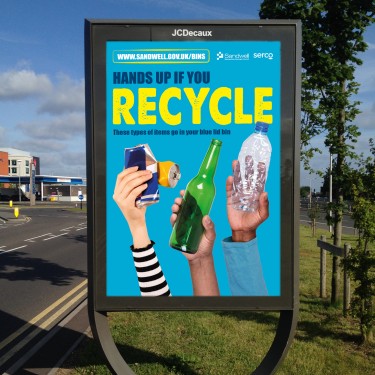
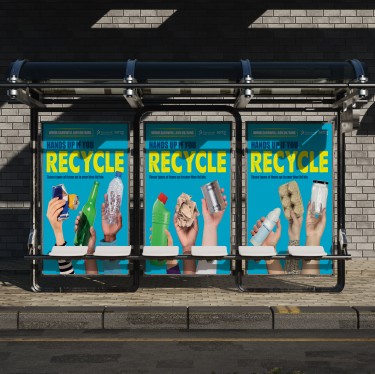
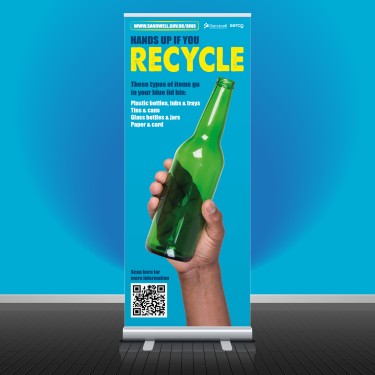
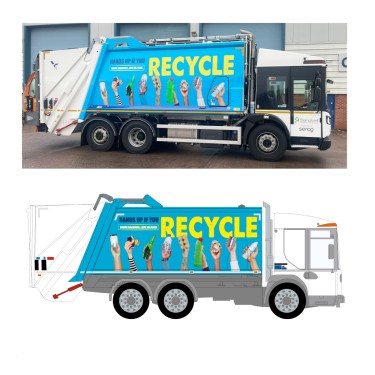
One of the larger recent projects was the HANDS UP IF YOU RECYCLE campaign, which appeared across vehicle graphics, bus shelters, large street advertising, social media and printed information going directly into people's homes.
One campaign, very different jobs
The big yellow RECYCLE message and the hands holding familiar recyclable objects gave the campaign a really strong visual identity, but what surrounded them had to change depending on where the message appeared.
On a large poster or bus shelter there isn't much time. Someone might be walking or driving past, so the communication needs to be big, simple and quickly understood.
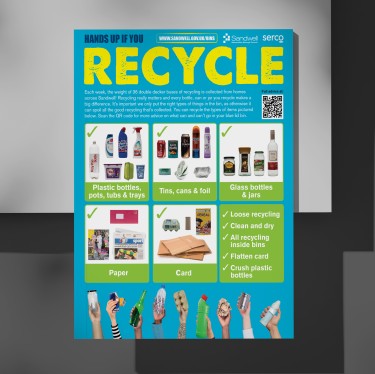
Printed material going directly into residents' homes can work much harder.
There was room to explain which items could go into the blue lid recycling bins, give practical advice about keeping recycling clean and dry, flattening card and crushing plastic bottles, and direct people towards further information.
That's why we don't really see print as something that exists on its own.
A printed leaflet, poster or piece of direct mail might be just one part of a much larger campaign. It needs to work alongside vehicle graphics, outdoor advertising, websites and social media so that wherever somebody encounters the message, they recognise that it's part of the same conversation.
This particular campaign is a lovely example of that.
A Sandwell resident might see the recycling message on the side of the collection vehicle outside their house in the morning, pass it again on a bus shelter later in the day, see something related on social media that evening and then receive more detailed information through their letterbox.
Each piece is doing a slightly different job, but together they reinforce the same message.
That's when print becomes much more than simply putting ink on paper.
It becomes part of the way an organisation communicates with the people it needs to reach.