Are you controlling your marketing… or leaving it to chance?
There’s a simple question behind a lot of the conversations we’ve been having recently with estate and letting agents.
It’s something we touched on in a recent direct mail piece, and it’s a question that tends to land because most businesses don’t intentionally leave things to chance — it just happens over time. A few social posts here, some property details there, the odd email, and before long the marketing becomes something that’s fitted in around everything else.
In property, that’s understandable. The day job is demanding, and rightly takes priority. But what often gets overlooked is how much of your visibility still comes down to the physical, printed elements of your brand — the things people see, pick up, keep and come back to.
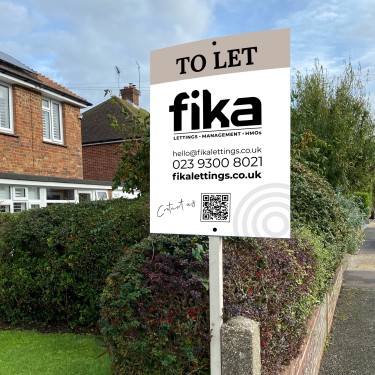
Boards, brochures, window displays, property particulars, folders, letters — these are often the first and most consistent touchpoints for potential clients. And when they’re done well, they quietly reinforce your brand every single day.
The challenge is that print is often treated in isolation. One job at a time. One supplier here, another there. Files created quickly, reused, adapted, or passed between people without much structure behind them. The result is that things can start to feel slightly inconsistent — not dramatically wrong, but not quite joined up either.
That’s where a more managed approach to print makes a real difference.
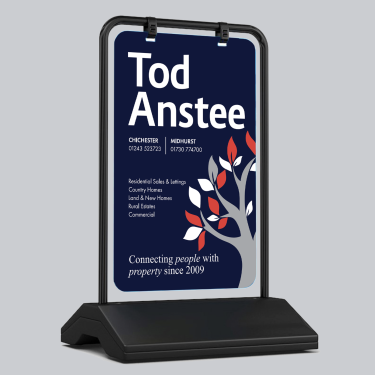
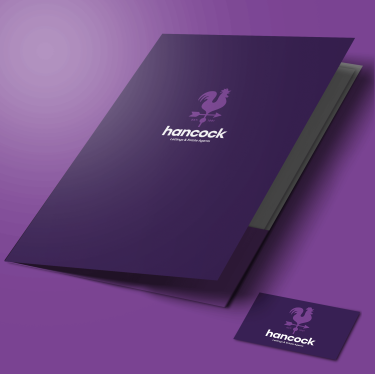
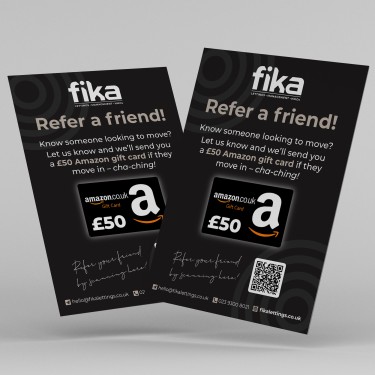
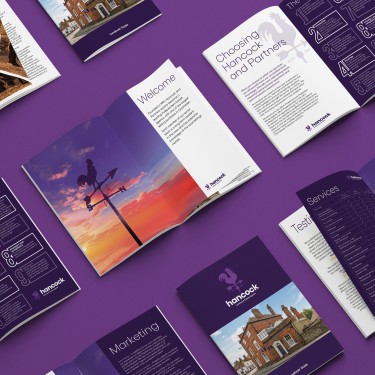
Working with clients like Fika, Tod Anstee and Hancocks, we’ve seen how consistency across printed materials plays a big part in how a brand is perceived. It’s not just about how something looks on its own, but how everything sits together — colour, typography, layout, tone — carried across every piece, whether it’s a brochure, a leaflet, or something as simple as a letterhead.
When that consistency is there, it builds familiarity. When it’s missing, things feel disconnected, even if the individual pieces are well designed.
That’s why we approach print a little differently. Rather than treating each job as a standalone piece, we help clients build a set of core materials that work together, and then manage the ongoing production so everything stays aligned over time. It removes the need to start from scratch each time and ensures that what goes out always reflects the brand properly.
Because in the end, print isn’t just about producing materials — it’s about supporting a consistent presence.
And that’s what turns marketing from something that happens occasionally into something that works continuously in the background.
So if your print feels a bit ad hoc, or like it’s evolved without a clear structure, it might be worth taking a step back and looking at how it all fits together.
A small change in approach can make a big difference over time.